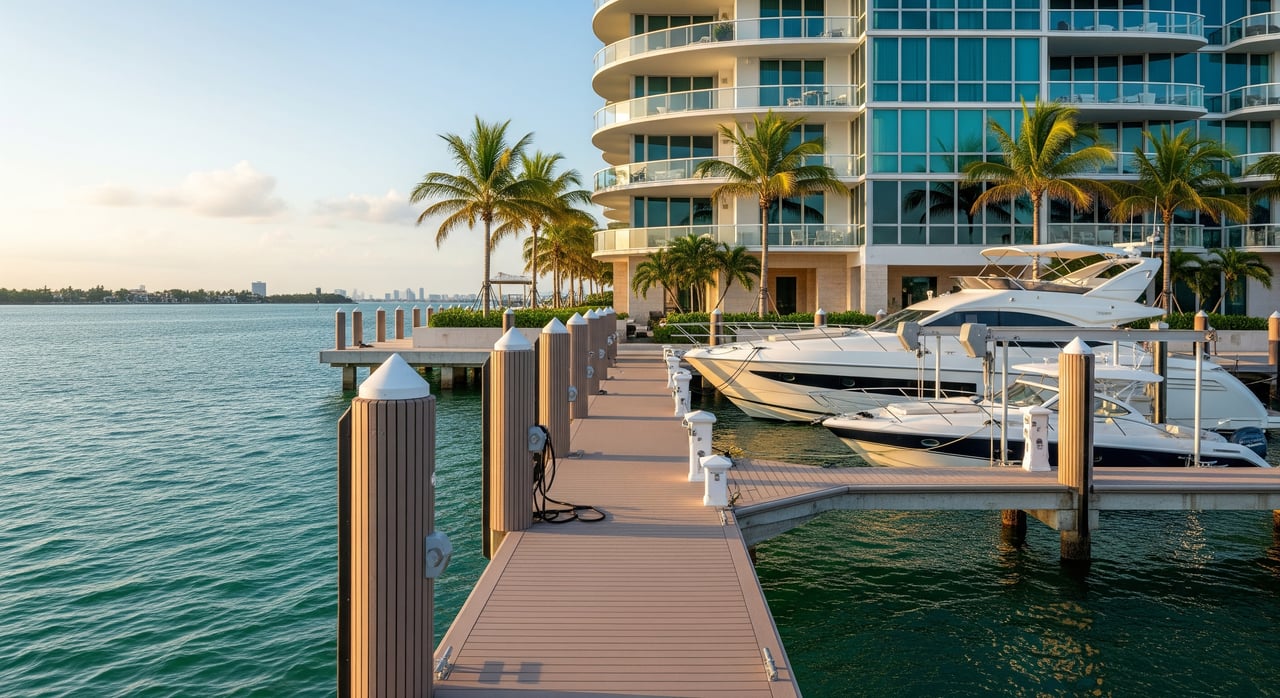
Imagine stepping out of your condo elevator and onto your boat within minutes. If that is your goal, Aventura deserves a close look. With its position along the Intracoastal Waterway and protected basins near Turnberry and Dumfoundling Bay, you get convenient access to Biscayne Bay and the Atlantic. The key is knowing how condo marinas work, what to verify, and how to compare buildings with confidence.
In this guide, you will learn the common marina models, typical rules and fees, Aventura-specific boating considerations, and a due diligence checklist you can use right away. Let’s dive in.
Why Aventura works for boaters
Aventura sits along the Intracoastal Waterway between Sunny Isles Beach and North Miami Beach. The waterfront areas near Turnberry and Dumfoundling Bay offer relatively direct Intracoastal access and short runs to open water. Many condo communities were built with boaters in mind, with basins that offer protection from wind and swell.
Every boat is different, so you should verify navigation details for your specific vessel. Confirm your length overall, beam, and draft. Current charts and notices help you check depths, shoaling, and bridge operations. Reliable resources include NOAA navigation charts and U.S. Coast Guard Local Notices to Mariners, along with updated electronic charts.
Common condo marina models
Not all “boat-friendly” buildings operate the same way. The model affects ownership rights, transfer rules, waitlists, and fees.
Deeded slips
Some communities offer deeded slips that function like separate real property. You may see a slip conveyed by its own deed or assigned to a specific condo. Deeded slips often can be sold or transferred, but association rules still apply. Confirm the legal status and any transfer conditions in the recorded condo documents.
Leased or HOA-assigned slips
Many buildings keep slips under association ownership and lease them to residents. Assignment can be based on seniority, lottery, or other rules. On resale, the slip may not automatically transfer with the unit. Ask for the assignment and waitlist policy in writing.
Third-party managed marinas
Some condos partner with a professional marina operator. Terms, fees, and waitlists are then governed by that operating agreement. Request a copy of the agreement to understand your rights and responsibilities as a resident.
Guest and dry storage options
A few communities have guest or transient slips for short stays. Policies vary. Some buildings may also offer limited dry-stack or trailer storage, or they may have an arrangement with nearby facilities. Always verify availability and rules before you rely on these options.
Rules and requirements to expect
Most condo marinas follow consistent marine safety and operations standards. Expect clear rules and annual documentation.
Insurance and vessel specs
You will likely need to show proof of liability insurance, with the HOA or marina named as additional insured. Each slip has size limits. Ask for the maximum length overall, beam, and draft that your assigned slip allows. Some marinas also require proof of seaworthiness or restrict certain propulsion types.
Liveaboard and guest policies
Many associations restrict liveaboards or overnight stays aboard. Guest docking rules also vary, with some requiring reservations or charging transient rates. Get the policy in writing to avoid surprises.
Environmental and pump-out rules
Sewage discharge is tightly regulated at the federal, state, and local levels. Many marinas provide pump-out access or have specific bilge and discharge rules. Ask about local no-discharge requirements and any on-site pump-out facilities.
Security and maintenance
Docks may have gated access, cameras, and lighting. You are usually responsible for lines, fenders, and routine upkeep of your vessel. The HOA typically maintains pilings, bulkheads, and dock utilities, but always confirm what falls under owner versus association responsibility.
Waitlists, fees, and transfers
Understanding the mechanics keeps your timeline and budget realistic.
- Allocation and priority. Slips can be assigned by seniority, unit size, lottery, or other criteria set by the HOA. Renters may have different priority than owners.
- Waitlist design. Some lists are tied to your unit, while others are tied to a person. You could lose position if fees go unpaid or if you do not actively renew your interest. Ask how the list works and request a copy of the current list.
- Transfer rules. Deeded slips may transfer on resale, but association consent or fees may apply. HOA-assigned slips often do not follow the unit to a new owner. Clarify this before you make an offer.
- Fees you might see:
- One-time initiation or capital contribution when you receive a slip.
- Monthly or annual slip fees for utilities, maintenance, and reserves.
- Transient guest fees for short-term docking.
- Transfer or administrative fees for application or slip changes.
- Special assessments for major marina repair or dredging work.
Aventura-specific checks
Local water conditions and access patterns matter, especially for larger boats.
- Depth and tides. Confirm recent depth soundings and any dredging history. Deeper-draft vessels may need certain channels or basins.
- Turning basin and maneuvering. Some dockfields are tight. Try to test-manage your boat size in similar conditions or speak with marina staff about winds and currents.
- Bridge clearances. The immediate Aventura area is generally accessible, but north and south routes include bridges. If you have a fixed tower or tall rig, note clearances on your typical route.
- Fuel, haul-out, and service. Identify the nearest fuel docks and service yards that can handle your boat. Dry-stack storage and large travel lifts are not common at residential condo docks.
- Hurricane preparedness. Ask for the building’s hurricane plan for the marina. You may be required to leave, add lines and chafe gear, or haul out. Clarify any fees and timelines.
- Guest access and parking. If you plan to host visitors by boat, understand guest docking rules, parking limits, and reservation procedures.
Your due diligence game plan
Before you write an offer, ask the seller and HOA for documents and clear answers. This helps you avoid costly surprises and supports smooth approvals.
Documents to request
- Marina rules and regulations.
- Slip assignment and waitlist policy, plus a copy of the current waitlist.
- Records showing which slips are deeded versus HOA-owned.
- Any slip lease or assignment agreements and transfer forms.
- HOA meeting minutes for the past 12 to 24 months that mention marina issues or assessments.
- The latest reserve study, including marina components and dredging reserves.
- Records of special assessments or planned capital projects at the docks.
- Insurance requirements for slip holders and any required endorsements.
- Permits and repair records for docks and pilings.
- Dredging records and current maintenance dredge permits if applicable.
- The current slip fee schedule and utility metering method.
- Any litigation or insurance claims related to marina infrastructure.
Questions to ask the HOA or marina manager
- Is there an assigned slip for my unit today? If not, how does the waitlist work and is it transferable with resale?
- What are the maximum LOA, beam, and draft for available slips? Are there different classes of slips?
- What are the initiation, transfer, and monthly or annual fees? Are electric and water included, and how is power metered?
- Are liveaboards, transient guests, or subletting of slips allowed? What are the guest dock rules?
- Who maintains pilings, docks, and utilities? How are major repairs funded?
- When was the basin last dredged? Are there known shoaling or depth issues?
- Are there planned marina projects or expected assessments?
- What security measures are in place? Gate, cameras, and lighting?
- Are boat lifts or davits allowed? What rules govern maintenance at the slip?
- What liability limits does the HOA require for boat insurance? What insurance does the HOA carry on the docks?
- If a third-party operator manages the marina, can I review that agreement?
Quick comparison checklist
Use this to compare Aventura buildings side by side as you tour:
- Marina type: deeded, leased, HOA-assigned, or third-party managed.
- Slip inventory: number of slips and size classes.
- Transfer rules: does a slip transfer with the unit?
- Waitlist: unit-based or person-based, and current estimated timing.
- Fees: initiation, monthly or annual, utilities, and any transfer charges.
- Utilities at slip: power type and metering, water, and pump-out availability.
- Physical constraints: max LOA, beam, draft; fixed or floating docks.
- Dredging: last dredged date and permit status.
- Equipment: davits or lifts on site, if any.
- Policies: liveaboard, guest docking, and subletting rules.
- Security: gates, cameras, lighting, and access control.
- Maintenance responsibility: owner vs HOA for docks and pilings.
- Insurance: minimum liability limits and additional insured requirements.
- Capital plans: recent assessments or planned marina projects.
- Nearby services: fuel, haul-out, and marine technicians.
- Hurricane plan: storm procedures and any related fees.
Hidden costs and red flags
You can avoid surprises by looking for these issues early:
- Do not assume a unit includes a slip unless a deed or HOA assignment proves it.
- “Waitlist” can be misleading. Confirm whether it is unit-based or person-based and whether it transfers on resale.
- Fees are often under-disclosed. Ask for the full schedule, including initiation, utilities, transfer, and transient rates.
- Infrastructure age matters. Pilings, electrical, and decking have lifecycles. Request reserve studies and recent repair records.
- Environmental limits can restrict dredging. Ask about permits and any known constraints related to seagrass or coastal rules.
How we help you dock the right deal
Choosing the right Aventura condo for your boat comes down to details. We help you pull the right records, pressure-test rules with the HOA or marina manager, and compare buildings using a simple decision framework. If you are buying from out of town, we provide virtual walkthroughs, video of the dockfield and turning basins, and coordinated calls with building management so you can move forward with confidence.
When you are ready, let’s talk about your boat, your route preferences, and your timeline. We will help you target the best-fit buildings and guide you through approvals and closing. Connect with Miami is Home to get started.
FAQs
What makes Aventura boat-friendly for condo owners?
- Aventura sits on the Intracoastal with protected basins near Turnberry and Dumfoundling Bay, offering relatively direct access to Biscayne Bay and short runs to the Atlantic.
How do condo slip waitlists usually work in Aventura buildings?
- Associations often prioritize owners in good standing and use seniority or lotteries; lists may be unit-based or person-based, so confirm transfer rules and current timing.
What insurance do I need to keep a boat at a condo marina?
- Most marinas require minimum liability coverage and may ask that the HOA or marina be named as additional insured; request the exact limits in writing.
Are liveaboards allowed at condo marinas in Aventura?
- Many associations prohibit or restrict liveaboards; check the building’s rules to learn what overnight or extended stays aboard are allowed.
What documents should I review before buying a condo with a slip?
- Ask for marina rules, waitlist policy and current list, fee schedule, reserve study, recent HOA minutes, dredging and permit records, and insurance requirements.